
Google Pixel 11 Pro Fold Review
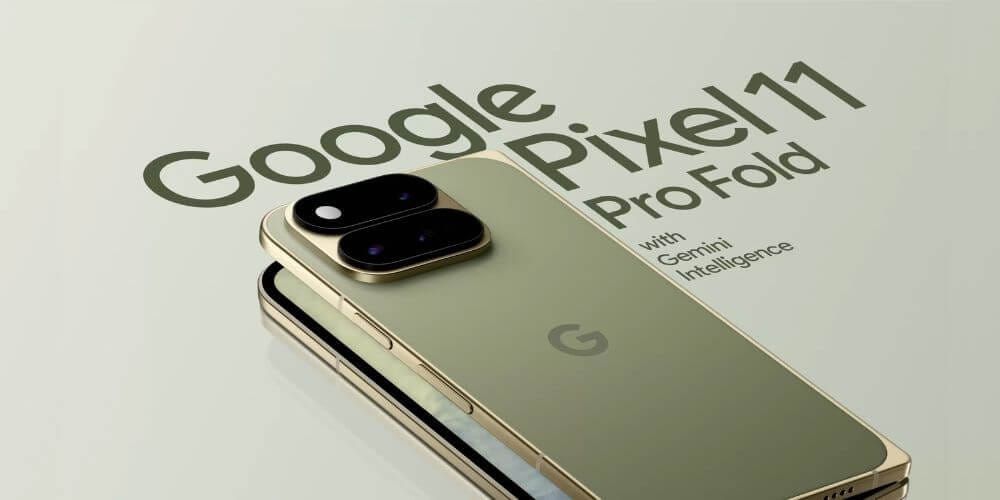
It was a big deal when Google released its first foldable phone in 2023, and over time that range has become one of the top options for those wanting a unique smartphone experience. The 10 Pro Fold was a sizeable improvement over its predecessor, and after spending some time with the 11 Pro Fold, we came away pretty impressed with Google’s efforts here, too.
Specifications
• Release date – 20th August 2026
• Dimensions – 155.2 x 76 x 10.1mm (folded); 155.2 x 150.4 x 5mm (unfolded)
• Weight – 239g
• OS – Android 17
• Display – 6.5” Super Actua display (cover display); 8” Super Actua Flex display (unfolded)
• Resolution – 1080 x 2342 (cover display); 2076 x 2152 (unfolded)
• Processor – Google Tensor G6
• RAM – 16GB
• Storage – 256GB; 512GB; 1TB
• Rear cameras – 48MP wide; 10.5MP ultrawide; 10.8MP telephoto
• Front camera – 10MP
• Battery – 4,806mAh
• Water & dust resistance – IP68
When did the Pixel 11 Pro Fold release?
The Google Pixel 11 Pro Fold was announced on the 12th August 2026, with a release date of 20th August 2026.
Design
On the surface, the 11 Pro Fold is a dead ringer for the phone before it, but Google actually made some interesting refinements that make a difference. Firstly, the 11 Pro Fold is noticeably thinner than the 10 Pro Fold; dropping from 10.8mm to 10.1mm. We found the 11 Pro Fold much easier to hold as a result, particularly when handling it to watch videos on the unfolded screen.
A consequence of being thinner is that the 11 Pro Fold is also much lighter. We’re not underselling this either; 239g instead of 258g is one of the biggest weight reductions in recent smartphone memory. There’s no doubt that some will prefer the heaviness of the 10 Pro Fold, but we felt that the 11 Pro Fold was more comfortable overall.
The last noticeable design change on the 11 Pro Fold is the HiLight; a feature that was introduced on the 11 Pro and 11 Pro XL models. It functions exactly the same here as it does on those handsets, so it’s nice to see that range consistency.
Display
Make no mistake; the 11 Pro Fold’s cover and unfolded screens are some of the best in the industry. However, it’s worth highlighting some tweaks that do paint a more complicated picture.
Let’s start with an excellent positive: the 11 Pro Fold’s 6.5” cover screen is bigger than the 10 Pro Fold’s. That’s an immediate win for this phone, and helps showcase the beautiful Super Actua display technology in all its glory. It also supports a much higher 3,600 nits peak brightness - so it’s far easier to see this display in bright viewing conditions – and a wider refresh rate range of 1-120Hz.
This being said, the 11 Pro Fold’s cover display does come with a slightly lower resolution of 1080 x 2342, which represents a marginal decrease from 1080 x 2364 on the 10 Pro Fold. Few people are going to notice a visual difference, but it’s one area where the 11 Pro Fold does take a small step back in the grand scheme of things. Its aspect ratio was also reduced from 20:9 to 19.5:9; again, it’s barely noticeable.
The unfolded Super Actua Flex display has been kept the same size at 8”, as have the 2076 x 2152 resolution and 1-120Hz refresh rate range. This screen did also get a brightness boost, jumping from 3,000 nits to 3,600 nits much like the cover display.
On the flip side, the 11 Pro Fold’s unfolded screen has a lower contrast ratio of 1,500,000:1. This basically means that the display’s brightest whites and darkest blacks don’t have as distinct a contrast, but similar to other tweaks we’ve highlighted here, it’s not going to be especially noticeable to most users.
It’s interesting, then, that we saw reductions in certain areas at all. We could barely tell the difference in terms of raw image quality, and it’s not like the battery really benefits. However, increases in screen size and brightness more than offset these changes.
Performance & software
Much like the rest of the Pixel 11 range, the 11 Pro Fold comes equipped with the Tensor G6 processor. Whilst this CPU isn’t a monumental leap forward, it is faster than previous iterations and is specifically targeted towards making the phone’s AI processes much easier to run.
Speaking of AI, the 11 Pro Fold supports the brilliant Magic Capture feature. We loved experimenting with this, as with a single tap, you can create a collection of videos and photos without having to manually snap each moment. Images will also be automatically unblurred and cropped, so you can just start sharing right away: it works a treat.
The rest of the 11 Pro Fold’s AI suite will be pretty familiar if you’ve owned a Pixel phone in recent years. Feature hallmarks such as Circle to Search, Live Translate and Camera Coach are all present, and it comes with Android 17 pre-installed.
Cameras
Camera software is really where the 11 Pro Fold shines, as its hardware largely borrows from the 10 Pro Fold. You’re again getting a 48MP wide, 10.5MP ultrawide and 10.8MP combo, albeit with a larger 85-degree field of view and sensor in the wide camera to capture more light and boost image vibrancy.
We’ve already mentioned how much we enjoyed the Magic Capture feature, but there’s also Camera Looks that wasn’t present on the 10 Pro Fold. If you don’t like messing around in the edit tools, this feature is a lifesaver. With it, you can pre-define how you want your photos to look before taking a snap; maybe you want your image to have deeper shadow contrasts or look more natural. Camera Looks will do this for you, and we were delighted with the results.
Improvements to Super Zoom are also worth mentioning. The 11 Pro Fold supports 30x zoom rather than 20x, so images captured at long distances retain significantly more detail without becoming blurry and pixelated.
Battery
Battery life on the 11 Pro Fold is another example of give and take, with improvements made in one direction but reductions in another. Raw battery capacity was reduced from 4,919mAh to 4,658mAh, which isn’t ideal when wired charging speed is basically the same, too. On the other hand, greater performance efficiency - courtesy of the Tensor G6 CPU - does mean you might be able to squeeze out more battery life in a single charge.
Pixelsnap wireless charging is also faster at 25W, which represents a fairly sizeable jump from the 10 Pro Fold’s 15W. If you own a Pixelsnap charger, you’re likely to experience a much-improved charging experience.
Final thoughts
There are enough improvements on the Pixel 11 Pro Fold to make it a worthy upgrade, even if you own a 10 Pro Fold. The increase in screen size on the cover display is excellent, brightness is significantly enhanced across the board, and the thinner design makes the 11 Pro Fold one of the most portable folding handsets on the market.