
5G vs 4G: What's the Difference?
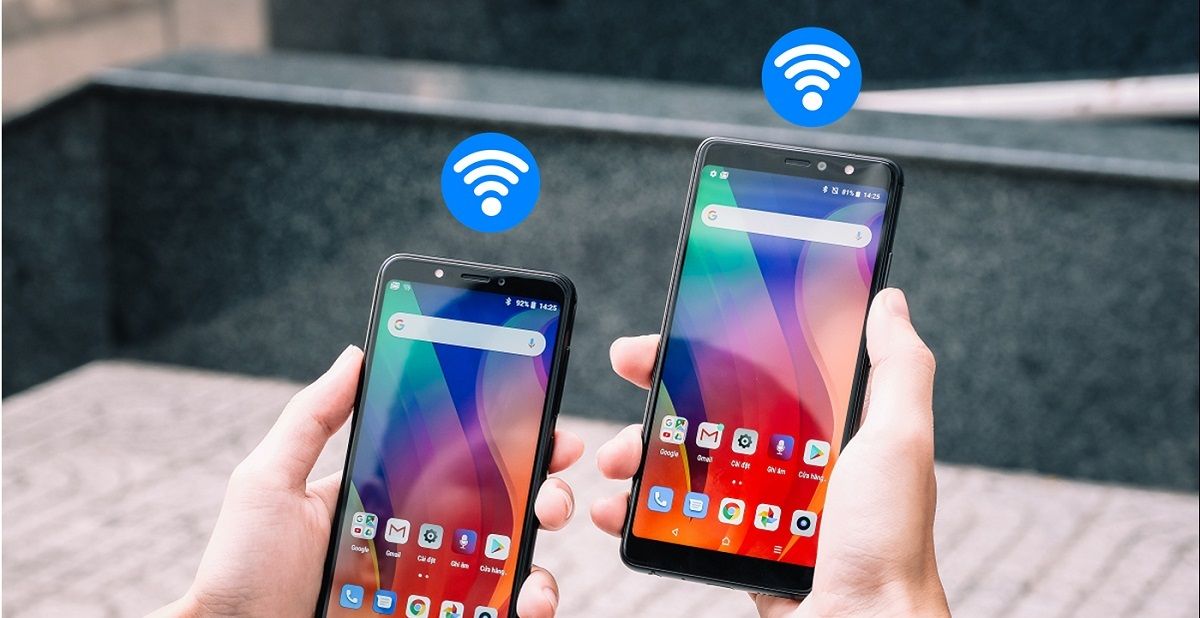
If you own a smartphone, you’re likely to use a mobile network as part of the experience. Wireless technology has progressed to the point where five versions exist, so what are the differences between them?
In this guide, we’ll be taking a look at 5G and exploring the differences between it and 4G in key areas, such as speed, data usage and overall efficiency.
If you’re keen on picking up a 5G-compatible phone for yourself or someone else, our dedicated range has multiple handsets to choose from.
1 - 5G is considerably faster than 4G
5G is demonstrably better than 4G in most areas. One of the biggest and most notable differences between them is speed, with 5G holding a significant advantage.
Whilst 4G has a maximum download speed of 300 Mbps, 5G can achieve download speeds of 10 Gbps; this means that with 5G, you can stream media, interact with apps and play games faster than on a 4G network, with reduced buffering and lagging.
Not only will you be able to stream media in higher resolutions with 5G, but you can also download content, movies and TV shows faster than with a 4G connection. For example, if you download a full-length film on 4G to your mobile phone, this will take around 2-3 minutes on average. Upgrade to 5G and this will be done in just 4-40 seconds – reducing the download time by 10% on average.

2 - 5G has a lower latency with less buffering
Latency is the time it takes for a network to respond to a request, and 5G improves on this front compared to its 4G predecessor. 4G has a latency of ~50 milliseconds, whilst 5G’s latency stands at ~1 millisecond - that's approximately 50x better than 4G.
This makes 5G phones super-speedy with minimal buffering. 5G phones are therefore far superior for media streaming and gaming, since you won’t need to wait as long for your phone to respond to commands.
3 - 5G uses higher frequencies
As we mentioned, speed is a significant difference between 5G and 4G. This is possible because of how 5G uses higher frequencies and smaller wavelengths, essentially creating more ‘space’ for people to connect to the network with reduced congestion.
Mobile networks use radio waves to transfer data, but 5G uses higher frequencies than 4G to do this. In fact, 5G utilises extremely high frequencies between 30 and 300GHz, compared to 4G which transmits data via frequencies below 6GHz.
What does this mean? Well, higher frequencies mean larger bandwidths, and larger bandwidths mean more capacity to transmit data, like when using apps, streaming or downloading media. This doesn’t mean 5G uses up more data on a fundamental level, but with faster speeds and greater capacity, you might be more inclined to download a 4K film over a HD one for example. As a result, it’s important to know your data plan and what its limits might be.
The higher frequencies of 5G can also be used next to other wireless signals without causing interference; 5G therefore functions better in high-traffic, highly-crowded areas.

4 - 4G is available in more places
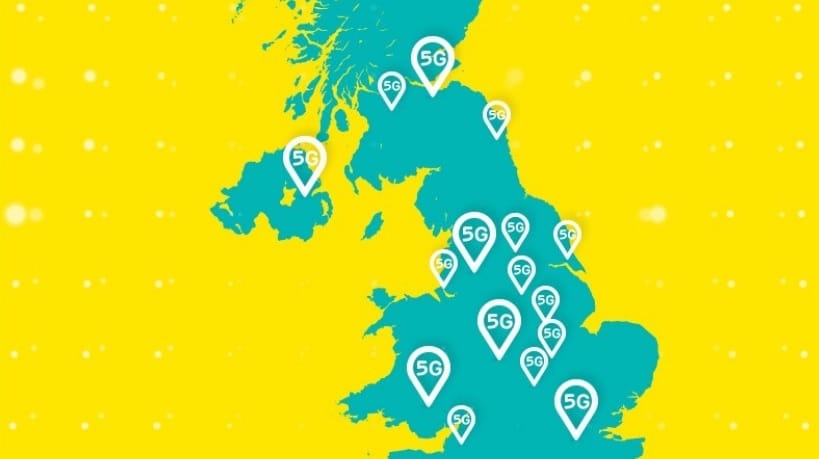
4G is more widely available, but 5G is expected to fully cover the UK by 2030. It can be accessed via a large number of networks, such as:
• Vodafone
• iD Mobile
• EE
• O2
• VOXI
• BT
• Sky Mobile
• Tesco Mobile
• Giffgaff
• Virgin Mobile
• ASDA Mobile
• Lebara
• CM Link
• Lyca
• Smarty
• Talkmobile
5 – 5G is more adaptable
4G isn’t as malleable as 5G, with the latter offering a greater level of flexibility in terms of how it can be included in devices. 5G connectivity in a phone is different to how it’s utilised in industrial or medical technology.
5G can essentially be ‘purpose-built’, which for smartphones means a connection that doesn’t take up huge amounts of battery life for example (although this will depend on your personal download/streaming habits). A 5G-specific technology called ‘network slicing’ also plays its part in improving adaptability, wherein portions of a network can be segmented to optimise for a particular purpose.
6 – 5G can support more devices
5G’s ability to handle more devices connected to it means the ‘Internet of Things’ is more viable than ever. IoT refers to multiple devices ‘talking’ to each other within a network, such as smart fridges, phones and TVs, to share information like food order deliveries.
Because 5G provides more capacity thanks to the use of small-cell technology (rather than 4G’s reliance on cell towers for transmission), a greater number of devices can connect together within homes and other places.
Conclusion
As you’ve seen, 5G offers significant advantages over 4G networks. If you’re wondering whether your current phone supports 5G, we have another handy guide to help you find out.
5G vs. 4G FAQs
Is 5G better than 4G?
In a nutshell, yes: 5G is better than 4G in several ways. It’s significantly faster, can handle more connections while keeping latency down, and is more suitable for the modern world with how devices can communicate with one another.
One area that 4G holds an advantage is availability, as 5G is not available everywhere. However, this gap is expected to close from 2030 onwards.
Does 5G use more data than 4G?
No, 5G doesn’t consume more data than 4G. However, because it’s faster and can download/stream larger files more easily, you might end up downloading more of these sizeable files and use more data as part of a behaviour shift.
Is it worth getting a 5G phone?
If you want to stream HD videos with greater speed, watch 4K videos, or simply desire a smoother wireless experience, investing in a 5G phone is potentially worth it; especially as 5G availability continues to expand. However, if these things aren’t important to you, a 4G phone is still a viable option.
How long until 4G is phased out?
4G isn’t expected to be phased out until 2035 onwards, with at least another decade for full sunsetting of the technology.
Does 5G drain battery faster?
5G can use up anywhere from 6% to 20% more battery life than 4G, but this is also determined by other factors such as how much data you’re consuming. You might use more battery life on 5G, therefore, because the connection is faster and potentially feel encouraged to download more.
Do I need a new SIM card for 5G?
You’ll only need a new SIM card for 5G if you own an older phone, which might have a SIM card that’s not compatible such as the iPhone 11 and Pixel 4/5 series. These handsets are also not considered ‘5G-ready’.