
iPhone 17e Review
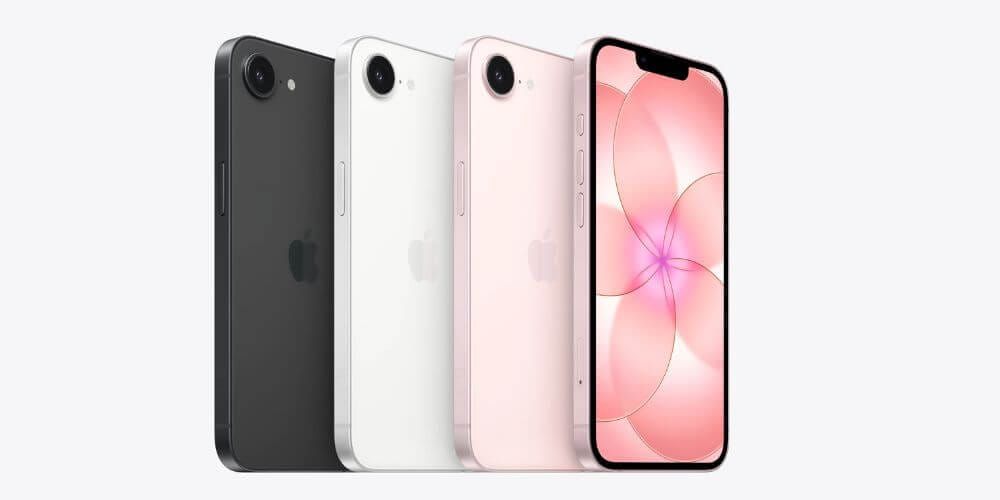
The ‘e’ series of iPhones serve as a budget-friendly way to enjoy each range’s main features, albeit with a few concessions. The iPhone 17e is a great entryway to the 17 series, and in this review, we’ll be exploring why.
Pick up the iPhone 17e in one of three colour schemes and up to 512GB storage.
Specifications
• Release date – 11th March 2026
• Dimensions – 146.7 x 71.5 x 7.80mm
• Weight – 170g
• OS – iOS 26
• Display – 6.1” Super Retina XDR
• Resolution – 2532 x 1170
• Processor – A19
• RAM – 8GB
• Storage – 256GB; 512GB
• Rear cameras – 48MP
• Front camera – 12MP
• Battery – 4,005mAh
• Water & dust resistance – IP68
Reasons to buy
• Excellent performance for the price
• More base storage size than the iPhone 16e
• First ‘e’ series iPhone to support MagSafe wireless charging
Things to consider
• Like with all ‘e’ iPhones, the 17e is designed as an affordable gateway into the iPhone world; you’re not getting all the bells and whistles. Despite that, it offers some noteworthy features that elevate it way above the 16e, such as supporting MagSafe charging
Design
If you were to put the iPhone 17e next to the 16e, you’d be forgiven for thinking there were no differences between them. Whilst there are indeed some strong similarities, the 17e comes with a few treats you might not realise are present.
First up is the upgraded Ceramic Shield 2 screen, which affords greater protection against scuffs and scratches. The 17e has a similar overall level of durability as its base iPhone 17 sibling; same aluminium frame, too, as well as an IP68 rating.
Another addition we must praise highly is the starting storage capacity of 256GB - instead of 128GB – for the same price. Given that the 17e was designed chiefly as an affordable, travel-friendly option to the iPhone line-up, having that extra storage for photos is a significant win.
Rounding out the design updates on the iPhone 17e is the most impressive change by far: the addition of MagSafe wireless charging. This wasn’t present on the preceding 16e, and it feels like a massive blind spot in hindsight. Another design win for the 17e.
Display
There’s not a whole lot to say about the iPhone 17e’s display; fundamentally, it’s the same one as on the 16e. You’re getting a 6.1” OLED screen with HDR and True Tone technology, as well as a peak brightness of 1200 nits.
The 17e doesn’t come with a 120Hz ProMotion refresh rate or the Dynamic Island feature, which will only be an issue really for those that target the highest refresh rates and bespoke Apple features.
Performance
There’s little separating the iPhone 17e from its base sibling on the performance front, which – given its lower price – is certainly a tick in the box for the ‘e’ model. It comes with the excellent A19 CPU and 8GB RAM, providing plenty of horsepower when gaming or multitasking between apps.
You’ll experience the biggest jump in performance if you’ve owned an ‘e’-series iPhone before, such as the 16e. The shift from an A18 chip to an A19 variant isn’t monumental, but it’s noticeable enough that the jump is worth it; the 17e’s AI features undoubtedly benefit from the extra processing power.
Software
If you haven’t changed iPhone handsets in a while, the 17e is a great way to experience recent software updates like Liquid Glass and Apple Intelligence without breaking the bank. The latter has come a long way since its debut in 2024, particularly when it comes to editing and getting creative with unique features like Genmoji and Image Wand.
One thing to keep in mind if you’re at all concerned about connection speeds on your 17e; it doesn’t support Wi-Fi 7 like the base iPhone 17, or Bluetooth 6. Instead, it retains Wi-Fi 6 and Bluetooth 5.3 respectively, similar to the 16e.
Generally speaking, you’re unlikely to notice a significant difference in speed, but it’s worth keeping these details in the back pocket if you plan to transfer data over Wi-Fi or Bluetooth on a frequent basis; might be worth opting for the iPhone 17 in that case.
Cameras
‘e’-series iPhones have distinctive camera arrays, typically coming equipped with a single Fusion camera that acts as a ‘two-in-one’ snapper. The 17e is no exception, and it offers a similar experience to the 16e with the same 48MP camera.
Whilst there were no major upgrades to the 17e’s photography chops, it represents a fantastic option if you want to capture the odd stunning picture now and again. You can also record videos in Dolby Vision up to 4K resolution; again, at this price, we can’t argue with the 17e’s value.
Battery
As we touched on previously, one of the iPhone 17e’s most significant features is the inclusion of MagSafe wireless charging. We’re not being hyperbolic when we say this was a game-changer for the ‘e’ series, vastly improving its charging capabilities by offering 15W speeds instead of 7.5W.
Outside of MagSafe, you’ll generally get the same amount of usage out of the 17e as its predecessor; ~26 hours of video playback.
Conclusion
The whole point of the iPhone ‘e’ model is to offer most – but not all- of each range’s defining features in an affordable package. With this in mind, the iPhone 17e is a winner; distilling the 17 series into a budget-friendly option that’s sure to please.
Whether you’re switching to the 17e from an older iPhone or an Android device, our handy transfer guides will help you move your data across in no time.
FAQs
Is the iPhone 17e worth it?
The iPhone 17e comes with a faster processor and more base storage than the preceding iPhone 16e, so it’s certainly a valuable upgrade option for 16e owners and a better phone overall.
Which is better, iPhone 17 or iPhone 17e?
It truly is a matter of what you need from your new handset. If you’re after a bigger screen, more cameras and improved battery life, the base iPhone 17 is the way to go. If you want to save some cash while still getting an iPhone with excellent performance, the 17e is worth considering.
How fast can the iPhone 17e charge?
When charging via a wired connection, the iPhone 17e can get back to 50% in ~30 minutes with a 20W charger. Thanks to its MagSafe wireless charging support, it takes ~45 minutes to reach 50% while on-the-move.