
iPhone Duo Review
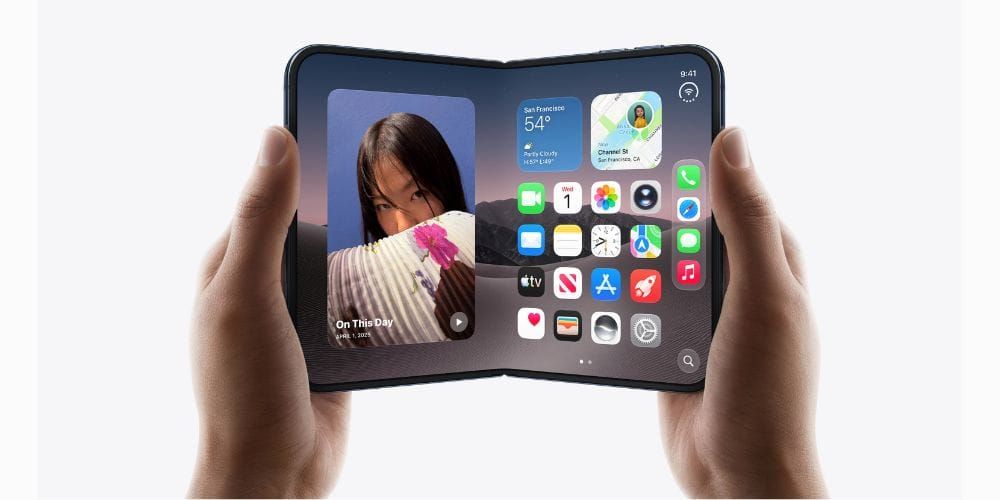
It had been a long time coming, but 2026 was the year that Apple finally welcomed a foldable to the iPhone family. Apple perhaps had the luxury of assessing the market, seeing what its competitors were doing and come out swinging with a foldable packed with lessons learnt. In hindsight, this looks like time well spent; the iPhone Duo is an exciting addition to the series and a fantastic foldable phone in its own right.
Specifications
• Release date – 23rd October 2026
• Dimensions – 117.8 x 84.1 x 11.3mm (closed); 117.8 x 164.6 x 5.2mm (open)
• Weight – 254g
• OS – iOS 27
• Display – 7.6” Super Retina XDR (open); 5.4” Super Retina XDR (closed)
• Resolution – 1878 x 2670 (inner display); 1398 x 2034 (outer display)
• Processor – A20 Pro
• RAM – 12GB
• Storage – 256GB; 512GB; 1TB; 2TB
• Rear cameras – 48MP Fusion main; 48MP ultrawide
• Front camera – 12MP
• Battery – Up to 31 hours video playback (inner display); up to 44 hours video playback (outer display)
• Water & dust resistance – IP68
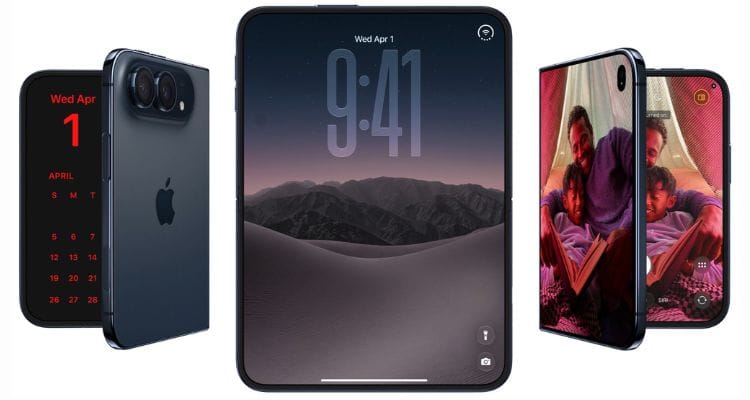
When did the iPhone Duo release?
The iPhone Duo was announced on the 9th September 2026, with a release date of 23rd October 2026.
Design
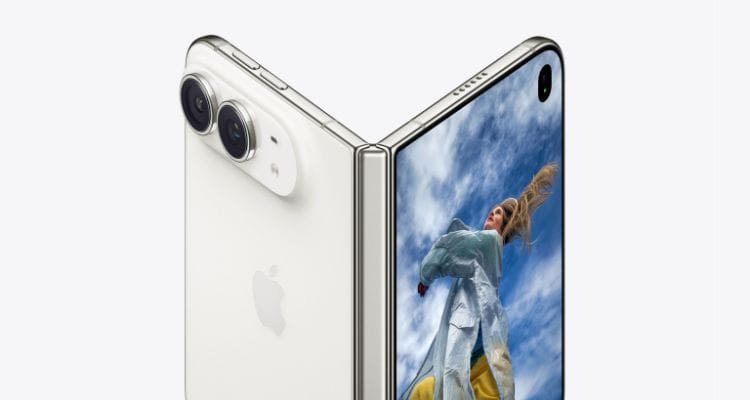
There’s a thrill that comes with handling a phone that’s an entirely new experience. We’re not necessarily comparing using the Duo to the original iPhone, but it’s the closest comparison; this is something we’ve never seen before from Apple.
We’ve handled many foldable phones by this point, but there are still opportunities to stand out and impress. The iPhone Duo instantly does this, especially with its barely perceptible crease where the screens fold over. You can just about see the crease, but we couldn’t feel it at all and never found it a distraction.
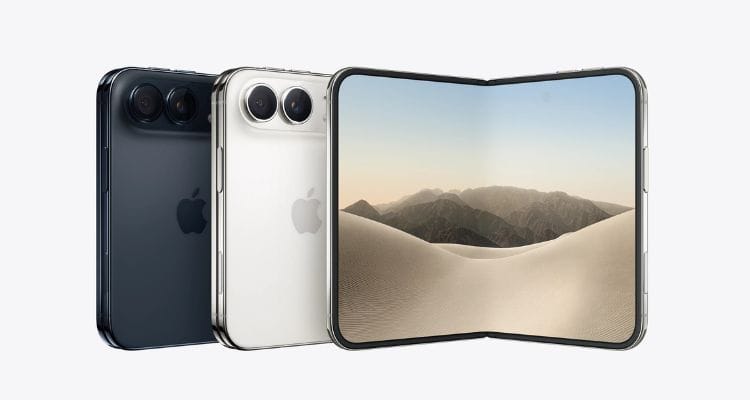
One of the biggest surprises of the iPhone Duo is the IP68 water and dust resistance rating. This is a surprise given that most competing foldables in the space – such as Samsung’s Z Fold8 – only support IP48 and therefore don’t afford the same level of protection from dust as the iPhone Duo; a significant durability win.
The iPhone Duo also comes with full support for the Apple Pencil. If there’s ever been an iPhone that’s tailor-made for the accessory, this is it; taking notes, editing photos and creating sketches on an Apple phone has never been easier.
Display
We feel pretty confident in declaring the iPhone Duo’s displays as outstanding. It isn’t the biggest set of screens – the HONOR Magic V5 has a 7.95” unfolded display compared to the Duo’s 7.6” offering– but the visual clarity and quality of the latter gives it the edge.
Aside from the obviously different design, the Duo is a familiar viewing experience. Apple brilliantly adapted its long-standing Super Retina XDR technology for a foldable form factor, capturing the impressive visual detail of a traditional iPhone. In this sense, we found it incredibly easy to transition over to the Duo.
The 5.4” cover display took a little bit of getting used to, especially after spending time with the iPhone 18 Pro’s 6.3” screen and the 18 Pro Max’s massive 6.9” offering. You’re essentially working with a squashed-down version of a typical iPhone screen, which sounds like a negative but – in reality – it ensures the iPhone Duo is comfortable to hold. If Apple had opted for a larger cover screen, it risked the Duo being unwieldy and cumbersome.
The unfolded display sports a new feature called nano texture, which helps reduce screen glare and make the middle crease less visible. The idea is that the textured finish scatters light upon hitting the screen, rather than bouncing between the crease and making it stand out. It’s a unique little innovation that we’d love to see replicated on other foldable phones.
Performance & software
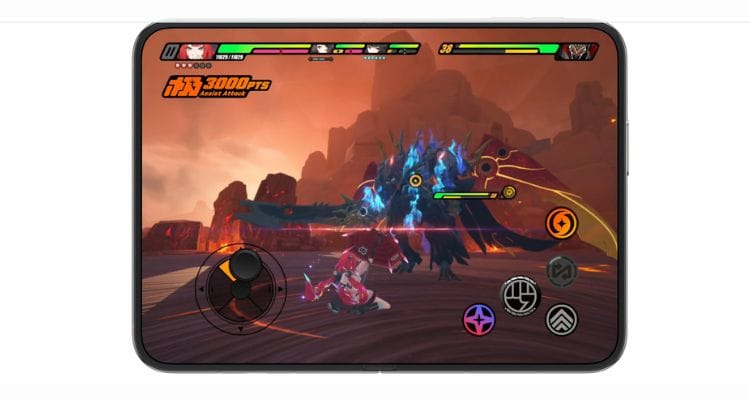
The iPhone Duo falls in line with the 18 Pro and Pro Max on the performance side of things, coming equipped with an A20 Pro CPU. Whilst those 18-series models broadly benefitted from this processor upgrade, it’s on the Duo that we really feel like the A20 Pro shines brightest. This is largely because the Duo is – by design – a phone that offers far superior experiences in areas like gaming, with the unfolded display allowing for greater immersion. Given then that the A20 Pro boasts a 7-core GPU as part of the chipset, we find the Duo to be the best demonstration of what this generation of Apple CPU can offer.
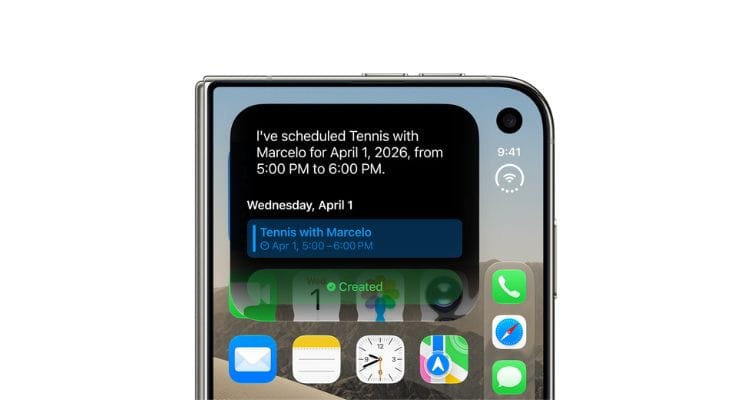
You might have thought us hyperbolic when we previously compared using the Duo to the original iPhone, but it really does provide one of the most unique experiences on an iPhone since its inception. Our time experimenting with the Duo’s software features hammered this home, even in familiar apps like FaceTime. Being able to position the Duo to take a video call isn’t unique in the foldable space, but it is unique on an iPhone. That alone will potentially feel quite transformative for long-time iPhone users.
Multitasking is also lightyears ahead of what’s possible on a traditional iPhone. We loved how we could have the Photos app on one side of the screen and a message app on the other; with a simple drag and drop, a photo is attached in the message without having to jump between apps. You also have significantly more space to engage with Siri AI thanks to the larger prompt window.
Cameras
It’s clear that Apple is banking on people using the Duo as a camera for its form factor, rather than the number of cameras it possesses. There are two cameras available on the Duo – a Fusion Main option and an ultrawide – that are both 48MP. You’re not getting a telephoto camera here, so keep that in mind if you’re coming over from a Pro or Pro Max model and expecting the same arrangement.
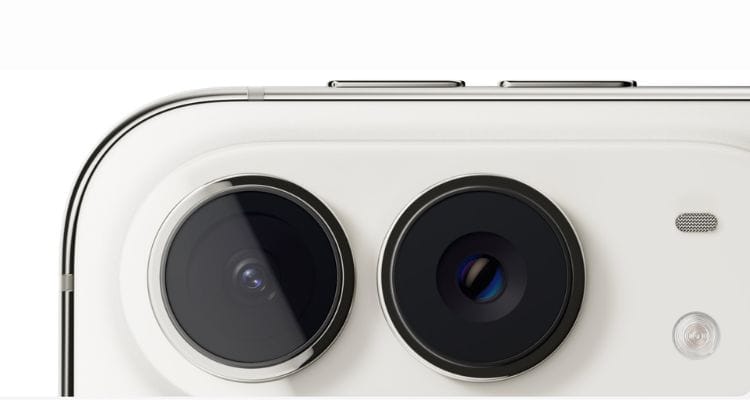
Despite having a lower number of cameras as other iPhone options, the Duo offers versatility in a completely different way. Its foldable design means you can position the Duo and take hands-free photos without the need to awkwardly place the phone, which in the iPhone space is a gamechanger. You can combine the form factor with the Smart Take feature and completely remove the need for a timer, too; the Duo will automatically take the photo when it sees all subjects in focus.
When all’s said and done, we think Apple struck an excellent balance between hardware and software innovation in the photography department. Being able to use the Duo in a myriad of different ways more than offsets the lack of a telephoto camera.
Battery
Battery life on the Duo is impressive, even if the playback potential between the folded and unfolded displays is quite large. The inner display can be used for up to 31 hours, whereas the cover display supports up to 44 hours. This is hardly surprising, given that the unfolded screen is much larger and therefore demands more power.
We didn’t have any trouble getting the Duo back up to full charge in a reasonable time. With a 60W charger, you can quite easily reach 50% in ~20 minutes. There’s also MagSafe support should you want to charge the Duo up when on the move.
Final thoughts
Is the iPhone Duo an investment? Absolutely, but it’s also unlike anything else that Apple has released before. If you’ve been crying out for a foldable iPhone for a while, we think you’ll be pleasantly surprised by what Apple eventually cooked up.