
Samsung Galaxy S26 vs. S26 Ultra
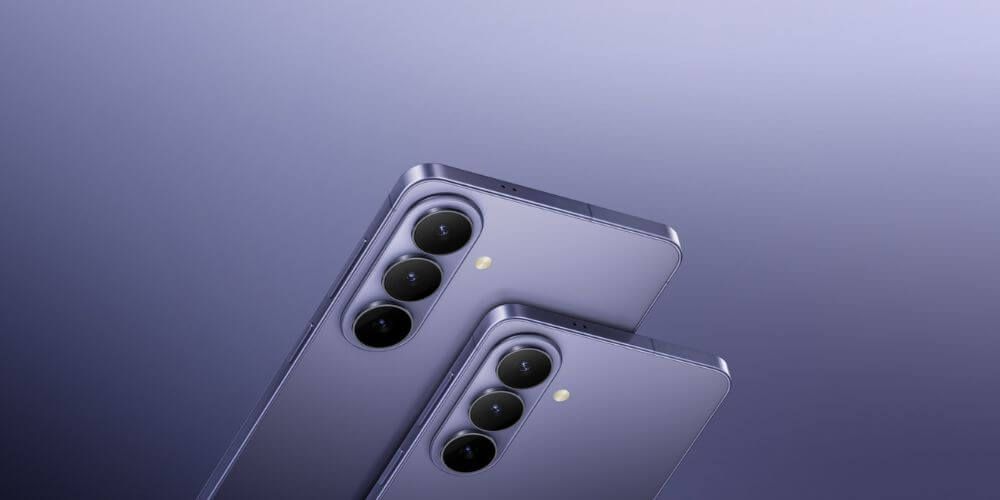
Despite having the word ‘ultra’ in its name, how does the Samsung Galaxy S26 Ultra actually compare to its base S26 sibling? In this guide, we’ll explore the differences between the two phones and help you decide which is right for your needs.
If you know what you’re after, take a look at our Galaxy S26 and S26 Ultra deals.
Specs comparison
|
Release
date – 11th March 2026 |
Release
date – 11th March 2026 |
|
Dimensions
- 149.6 x 71.7 x 7.2 mm |
Dimensions
– 163.6 x 78.1 x 7.9 mm |
|
Weight
– 167g |
Weight
– 214g |
|
OS –
Android 16 |
OS – Android 16 |
|
Display
– 6.3” AMOLED |
Display
– 6.9” AMOLED |
|
Resolution
– 1080 x 2340 |
Resolution
– 1440 x 3120 |
|
Processor
– Exynos 2600 |
Processor
– Snapdragon 8 Elite Gen 5 for
Galaxy |
|
RAM – 12GB |
RAM – 12GB/16GB |
|
Storage
– 256GB, 512GB |
Storage
– 256GB, 512GB, 1TB |
|
Rear
cameras – 12MP + 50MP + 10MP |
Rear
cameras – 50MP + 200MP + 50MP |
|
Front
camera – 12MP |
Front
camera – 12MP |
|
Battery
– 4,300mAh |
Battery
– 5,000mAh |
|
Water
& dust resistance – IP68 |
Water &
dust resistance – IP68 |
Design
Fundamentally, the S26 and S26 Ultra share the same core design principles; rectangular with flat edges and rounded corners. The more defining difference between the two is sheer size, with the S26 Ultra being significantly taller and wider.
Whilst the S26 Ultra being larger is a net positive for the display experience, it does mean that it’s much heavier, too. 214g puts the S26 Ultra on the lower end of flagship phone weights (the iPhone 17 Pro Max weighs 232g), but we advise caution if you’re wanting to take your phone everywhere with you in your pocket; the Ultra won’t fit as comfortably as the base S26.
Out of the entire S26 line-up, the Ultra is the only one that comes with Samsung’s S Pen for easy note-taking. It’s also the sole beneficiary of Gorilla Glass Armor 2, affording the S26 Ultra enhanced protection against screen bumps and scratches.
Displays
The S26 and S26 Ultra both come equipped with Dynamic AMOLED 2X displays, but being the larger of the two, the Ultra has the edge when it comes to screen size. 6.9” allows for a significantly more immersive experience, and you have plentiful real estate with which to take notes or multitask between apps.
Another feature to consider if display quality is important to you: the S26 Ultra sports a greater screen resolution of 1440 x 3120. Putting it between HD and 4K, this means the Ultra’s display outputs visuals with more detail and clarity. The base S26 has a very respectable 1080 x 2340 HD resolution, but as is clear to see, the Ultra is the way to go if you want the absolute best display experience possible from the S26 range.
Performance
Interestingly, the base S26 is the only model in the S26 series to have an Exynos 2600 CPU, with US versions sporting the Snapdragon 8 Elite Gen 5. The upside to this is that there’s not much difference in performance, so looking at the S26 as if the CPUs are no different, the phone excelled in most areas such as gaming and multitasking between apps.
When looking at the S26 range as a whole, there’s no overwhelming performance difference between the base S26 and Ultra. The latter does come with the option of 16GB RAM rather than 12GB if you want that extra horsepower, but most people will get the same general experience.
Software
The S26 and S26 Ultra share broadly similar feature suites, but the Ultra model does come with a few extra tools. In terms of 1-to-1 similarities, both support Android 16 and therefore sport features like Circle to Search and auto-grouping of notifications.
Where the S26 Ultra differs is in its privacy settings, which we found to be extremely effective. Using the Privacy Display feature on the S26 Ultra, you can set the screen so it dims or blurs the visuals when not viewed head-on, making it harder for passers-by to get a glimpse of things like bank details.
If you’re interested in AI, the S26 Ultra does come with a few features that the base S26 simply isn’t equipped to process. The AI ProScaler is designed to enhance the clarity and detail of older content, such as sub-1080p YouTube videos. In a similar vein, the 200MP camera’s ‘Zoom Enhance’ feature uses generative AI to ‘fill in’ gaps in an image, bringing clarity to certain parts that the camera just can’t capture.
Cameras
Continuing on the camera train, the S26 Ultra offers far more versatility than the base S26; to the extent that it’s hardly comparable if photography is a key factor for you:
|
Galaxy
S26 |
Galaxy
S26 Ultra |
|
Ultra-wide:
12MP |
Ultra-wide:
50MP |
|
Wide: 50MP |
Wide: 200MP |
|
Telephoto:
10MP |
Telephoto:
50MP |
From a video recording perspective, these two phones share a greater level of parity. Both can film up to 8K at 30FPS or 4K at 60FPS, and support the excellent slow-motion modes for cinematic footage.
Batteries
There’s no denying that the flagship S26 Ultra has the battery life-edge on the base S26, possessing a significantly larger 5,000mAh unit. However, one noteworthy thing here is that the S26 is the only one of these two phones to have seen an increase in battery capacity generation-to-generation, rising from 4,000mAh on the S25 to 4,300mAh.
The S26 Ultra also takes the crown for charging speeds, topping out at 60W compared to 25W on the base S26.
Conclusion
It’s no surprise that the Samsung Galaxy S26 Ultra beats out the base S26 in most head-to-heads, making it the de facto choice for those wanting a premium handset. The S26 still has its place though; if you’re after a more affordable phone, there are few better options.
Interested in learning more about Samsung’s other phone offerings? Explore the budget-friendly A series in our dedicated guide.