
iPhone Size Comparison Guide
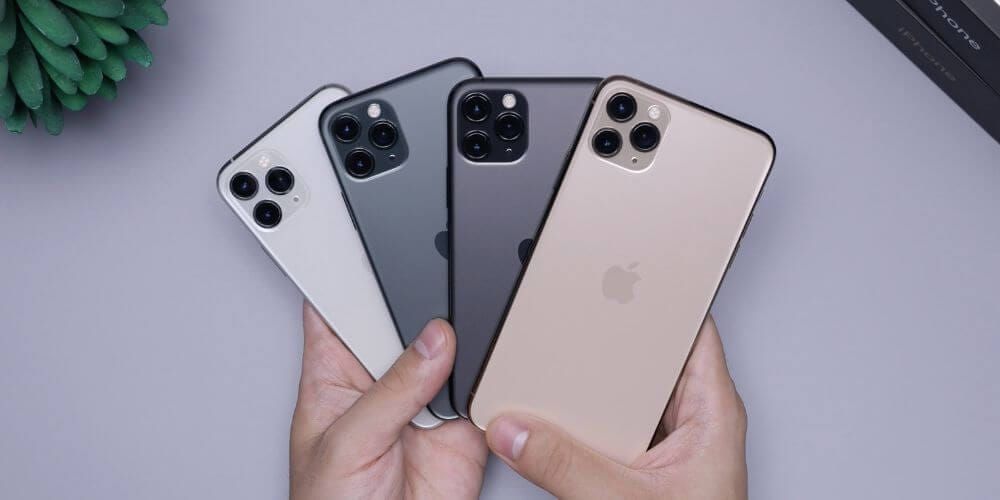
The variety of iPhones on the market – and the range of sizes – has grown considerably since the series’ early days. As a result, it’s not always easy to determine which handset is right for you.
Our iPhone comparison guide details all of the varying screen sizes and dimensions across Apple’s lineup, so you can easily compare the largest iPhones to the smallest. If you’re already on the hunt for a new iPhone, consider taking a look through our dedicated Apple range, too.
How is size measured on an iPhone?
Screen size is determined by measuring from one of the top corners to the opposite bottom corner diagonally across. Understanding this is important because the measurement in inches doesn’t account for any bezel or additional height added by the phone’s frame; it’s only the measurement from one corner of the screen to another. The device might actually be taller or wider than the screen’s measurement.
6.7”+ iPhones
If you want the largest iPhone screen possible, you’ll typically need to look towards the Pro Max and Plus models. These feature screen sizes between 6.7” and 6.9”, so you get considerably more real estate compared to the Pro and Base iPhones.
The caveat to this is an increase in overall phone size and weight. The Pro Max models in particular often exceed 220g, putting them on the heavier end of the scale. The iPhone 14 Pro Max remains the heaviest iPhone to date, and we have to give Apple some credit for trimming some of its weight while increasing screen size on later models, such as on the 17 Pro Max.
|
Model |
Screen
size |
Dimensions |
Weight |
|
6.9” OLED |
163.4 x 78 x 8.8mm |
233g |
|
|
6.9” OLED |
163 x 77.6 x 8.3mm |
227g |
|
|
6.7” OLED |
160.9 x 77.8 x 7.8mm |
199g |
|
|
6.7” OLED |
159.9 x 76.7 x 8.25mm |
221g |
|
|
6.7” OLED |
160.9 x 77.8 x 7.8mm |
201g |
|
|
6.7” OLED |
160.7 x 77.6 x 7.9mm |
240g |
|
|
6.7” OLED |
160.8 x 78.1 x 7.8mm |
203g |
|
|
6.7” OLED |
160.8 x 78.1 x 7.65mm |
238g |
|
|
6.7” OLED |
160.8 x 78.1 x 7.4mm |
226g |
6.3” to 6.5” iPhones
The number of iPhones that sit in the middle ground size-wise is smaller than the 6.7”+ bracket. In fact, the only modern iPhone with a screen size of 6.5” is the iPhone Air; you’d have to go back to the iPhone 11 series from 2019 to find another 6.5” model.
The iPhone 16 and 17 series were notable for their size increase, particularly the 16 Pro which saw an increase of 0.2” compared to the 15 Pro. The iPhone Air is also a standout for another reason, as it sports a 6.5” screen yet is significantly lighter thanks to its 5.6mm form factor.
|
Model |
Screen
size |
Dimensions |
Weight |
|
6.5” OLED |
156.2 x 74.7 x 5.6mm |
165g |
|
|
iPhone 11 Pro Max |
6.5” OLED |
158 x 77.8 x 8.1mm |
226g |
|
iPhone XS Max |
6.5” OLED |
157.5 x 77.4 x 7.7 mm |
208g |
|
6.3” OLED |
150 x 71.9 x 8.8mm |
206g |
|
|
6.3” OLED |
149.6 x 71.5 x 8mm |
177g |
|
|
6.3” OLED |
149.6 x 71.5 x 8.3mm |
199g |
6.1” iPhones
6.1” is a screen size that Apple have generally moved away from since the base iPhone 17, which adopted a 6.3” format. If you’re wanting to pick up an older iPhone on a budget, this is the size you’ll typically be enjoying.
Similar to iPhones in the 6.3” to 6.5” range, these handsets are considerably lighter than their 6.7”+ counterparts. We would usually recommend one of these sizes, then, if you’re greatly concerned about being weighed down by your iPhone when carrying it around.
It’s in this bracket that we also start to see LCD display technology being used. The iPhone 11 and iPhone XR were the last models that featured LCD displays, as Apple mainly go with OLED nowadays.
|
Model |
Screen
size |
Dimensions |
Weight |
|
6.1” OLED |
147.6 x 71.6 x 7.8mm |
170g |
|
|
6.1” OLED |
146.7 x 71.5 x 7.8mm |
167g |
|
|
6.1” OLED |
146.6 x 70.6 x 8.25mm |
187g |
|
|
6.1” OLED |
147.6 x 71.6 x 7.8mm |
171g |
|
|
6.1” OLED |
147.5 x 71.5 x 7.9mm |
206g |
|
|
6.1” OLED |
146.7 x 71.5 x 7.8mm |
172g |
|
|
iPhone 13 Pro |
6.1” OLED |
146.7 x 71.5 x 7.65mm |
203g |
|
iPhone 13 |
6.1” OLED |
146.7 x 71.5 x 7.65mm |
173g |
|
iPhone 12 Pro |
6.1” OLED |
146.7 x 71.5 x 7.4mm |
187g |
|
iPhone 12 |
6.1” OLED |
146.7 x 71.5 x 7.4mm |
162g |
|
iPhone 11 |
6.1” LCD |
150.9 x 75.7 x 8.3mm |
194g |
|
iPhone XR |
6.1” LCD |
150.9 x 75.7 x 8.3 mm |
194g |
3.5” to 5.8” iPhones
Below the 6” mark you’ll find a number of much older iPhone models, such as the now-discontinued Mini series and the original iPhone. We wouldn’t typically recommend going for one of these handsets if you can help it, as the hardware and software they include is quite out-of-date. However, if you need a throwaway phone as a backup, they are an affordable option.
|
Model |
Screen size |
Dimensions |
Weight |
|
iPhone 11 Pro |
5.8” OLED |
144 x 71.4 x
8.1mm |
188g |
|
iPhone XS |
5.8” OLED |
143.6 x 70.9 x
7.7mm |
177g |
|
iPhone X |
5.8” OLED |
143.6 x 70.9 x
7.7mm |
174g |
|
iPhone 8 Plus |
5.5” LCD |
158.4 x 78.1 x
7.5 mm |
202g |
|
iPhone 7 Plus |
5.5” LCD |
158.2 x 77.9 x
7.3mm |
188g |
|
iPhone 6S Plus |
5.5” LCD |
158.2 x 77.9 x
7.3mm |
192g |
|
iPhone 6 Plus |
5.5” LCD |
158.1 x 77.8 x
7.1mm |
143g |
|
iPhone 13 Mini |
5.4” OLED |
131.5 x 64.2 x
7.65mm |
140g |
|
iPhone 12 Mini |
5.4” OLED |
131.5 x 64.2 x
7.4mm |
133g |
|
iPhone SE (2022) |
4.7” LCD |
138.4 x 67.3 x
7.3mm |
144g |
|
iPhone SE (2020) |
4.7” LCD |
138.4 x 67.3 x
7.3mm |
148g |
|
iPhone 8 |
4.7” LCD |
138.4 x 67.3 x
7.3mm |
148g |
|
iPhone 7 |
4.7” LCD |
138.3 x 67.1 x
7.1mm |
138g |
|
iPhone 6S |
4.7” LCD |
138.3 x 67.1 x
7.1mm |
143g |
|
iPhone 6 |
4.7” LCD |
138.1 x 67 x
6.9mm |
129g |
|
iPhone SE (2016) |
4.0” LCD |
123.8 x 58.6 x
7.6mm |
113g |
|
iPhone 5S |
4.0” LCD |
123.8 x 58.6 x
7.6mm |
112g |
|
iPhone 5C |
4.0” LCD |
124.4 x 59.2 x
9mm |
132g |
|
iPhone 5 |
4.0” LCD |
123.8 x 58.6 x
7.6mm |
112g |
|
iPhone 4S |
3.5” LCD |
115.2 x 58.6 x
9.3mm |
140g |
|
iPhone 4 |
3.5” LCD |
115.2 x 58.6 x
9.3mm |
137g |
|
iPhone 3GS |
3.5” TFT |
115.5 x 62.1 x
12.3mm |
135g |
|
iPhone 3G |
3.5” TFT |
115.5 x 62.1 x
12.3mm |
133g |
|
iPhone |
3.5” TFT |
115 x 61 x
11.6mm |
135g |
Conclusion
As you’ve seen, there are a lot of screen size options when it comes to choosing an iPhone. Those wanting a top-of-the-line handset will generally be best served in the 6.5”+ range, but this will naturally incur a bigger cost. Conversely, most iPhones that are smaller than 6.5” are excellent mid-range to budget devices; ideal if you want to save some money or simply don’t need a larger screen.
Want to learn more about the best iPhones available? We have a handy guide that highlights our highest-recommend iPhones that are on the market.