
Google Pixel 11 vs. Pixel 10 Comparison Guide
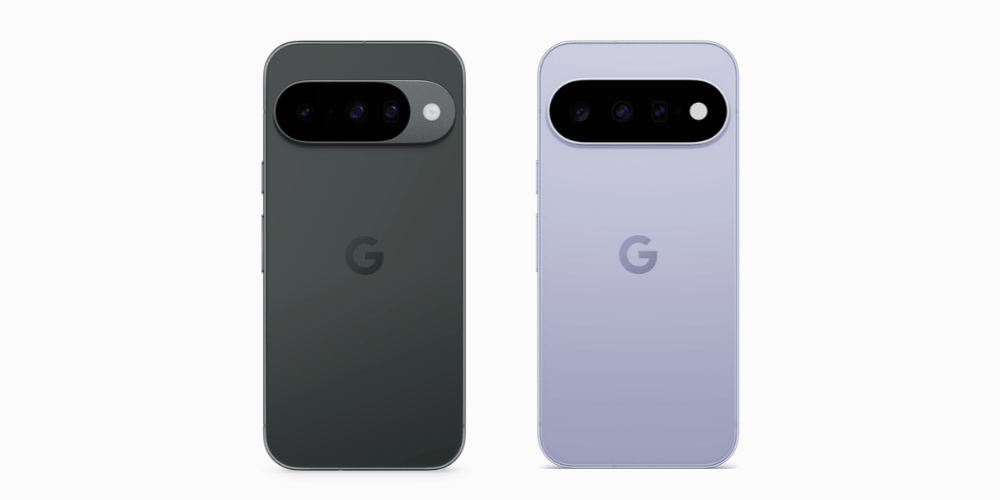
If you’re not sure whether the Pixel 11 or Pixel 10 is right for you, we’ve gathered together each device’s specs and features to help you compare. Let’s take a closer look.
Pixel 11 vs. Pixel 10 spec comparison
|
Model |
Pixel 11 |
Pixel 10 |
|
Dimensions |
152.8 x 72 x 8.6mm |
152.8 x 72.0 x 8.6mm |
|
Weight |
197g |
204g |
|
Processor |
Google Tensor G6 Titan M3 security
coprocessor |
Google Tensor G5 Titan M2 security
coprocessor |
|
Display |
6.3” Actua Smooth Display (60–120
Hz) |
6.3” Actua Smooth Display (60–120
Hz) |
|
Handset |
Corning® Gorilla® Glass
Victus® 2 polished back with satin-finish spacecraft-grade aluminium frame IP68 dust and water-resistance |
Corning® Gorilla® Glass
Victus® 2 polished back with satin-finish spacecraft-grade aluminium frame 1P68 dust and water-resistance |
|
Processor |
Tensor G6 |
Tensor G5 |
|
RAM |
12GB |
12GB |
|
Cameras |
Triple rear cameras -
48MP wide, 13MP ultrawide, 10.8MP 5x telephoto Super Zoom
up to 30x |
Triple rear cameras -
48MP wide, 13MP ultrawide, 10.8MP 5x telephoto Super Zoom
up to 20x |
|
Gemini |
Gemini Intelligence |
Gemini Intelligence |
|
Zoom |
Up to 30x |
Up to 20x |
|
Battery |
30+ hour battery life 4,985mAh |
24+ hour battery life 4,970mAh |
|
Charging |
Fast charging - up to 55%
in ~30 minutes Pixelsnap wireless
charging - Qi2.2 wireless charging up to 25W |
Fast charging - up to 55%
in ~30 minutes Pixelsnap wireless
charging - Qi2 wireless charging up to 15W |
|
Software |
Android 17 |
Android 16 |
Design
At first glance, there isn’t much to differentiate the Pixel 11 and Pixel 10. Both phones have the same dimensions, measuring 152.8 x 72 x 8.6mm, although the Pixel 11 is a little lighter at 197g compared with 204g for the Pixel 10.
The main design change is the camera bar. Google redesigned the Pixel 11’s camera bar with edge-to-edge glass, giving it a slightly different look while keeping the familiar Pixel design. Both phones have a glass back, aluminium frame, Gorilla Glass Victus 2, and IP68 dust and water resistance.
Display
If you already have a Pixel 10, the screen alone isn’t a major reason to upgrade to the Pixel 11. The two phones have very similar displays, with just a few changes to tell them apart.
Both phones have a 6.3” Actua OLED display with a 1080 x 2424 resolution, a 60–120Hz refresh rate, and up to 3,000 nits peak brightness. In everyday use, scrolling feels just as smooth on both, and either screen is bright enough to easily see outside.
Performance
This is where the Pixel 11 makes a real difference. It swaps the Tensor G5 in the Pixel 10 for the faster Tensor G6, while maintaining the same amount of RAM: 12GB. The newer chip is designed to better handle intensive processes like Gemini interactions and AI-powered photography features, and is also more efficient to help reduce battery drain.
The Pixel 10 is still a quick phone, with the Tensor G5 and 12GB RAM giving you plenty of performance for everyday use. However, the Pixel 11 is the phone of choice if you really prioritise performance in your handset purchase.
Cameras
The Pixel 11 and Pixel 10 were both noticeable improvements in the camera department. Pixel 10 was the first non-Pro model to feature a telephoto lens, which massively impressed us at launch. It also marked the debut of the Auto Unblur feature and one of our favourite photography tools in recent years: Camera Coach.
The jump from the Pixel 10 to Pixel 11 wasn’t quite as impactful, with both phones coming with a 48MP main camera, 13MP ultrawide and 10.8MP 5x telephoto lens. However, the Pixel 11 did increase Super Zoom from 20x to 30x, and its slightly larger main camera sensor can capture more light. You’ll notice this most in lower-light conditions, such as when taking photos indoors or at dusk. There are also two additional features in Magic Capture and Camera Looks.
It was always going to be hard for Google to land the Pixel 11 with the same splash as the Pixel 10; it’s not every day you get an entirely new camera being added after all. That being said, the Pixel 11 is still a fundamentally better camera phone than its predecessor.
Battery life & charging
Battery life gets a more noticeable boost on the Pixel 11. It has a 4,985mAh battery, only slightly larger than the 4,970mAh cell in the Pixel 10, but Google rates the newer phone for 30+ hours compared with 24+ hours on the Pixel 10.
Wireless charging is another area of improvement. The Pixel 10 supports Pixelsnap charging up to 15W, while the Pixel 11 moves that up to 25W with a Qi2.2-certified Pixelsnap charger. Wired charging remained similar, with both able to reach around 55% in 30 minutes using a compatible 30W charger.
Taking this into account, we found the Pixel 11 to be easier to rely on when spending long periods of time away from a charger.
Software & AI
The Pixel 10 launched with Android 16, whilst the Pixel 11 comes with a whole host of Android 17 features out of the box, so the newer handset gets Google’s latest software from day one.
Both handsets come with AI features like Magic Cue, which can pull information from across your apps when you’re planning or organising. With the Pixel 11, Google added more AI features into the mix such as Magic Capture, which can turn a moment into an edited collection of photos and videos.
Both phones support seven years of OS and security updates, so you can expect plenty of support for either one.
Verdict
The Pixel 11 builds on the Pixel 10 rather than making any major changes. There are some worthwhile improvements, but the two phones remain quite similar in everyday use.
The Pixel 11 is the one to choose if having the latest features and hardware matters to you. It gives you the newer processor, more recent AI features, and a few improvements that make it a more up-to-date Pixel experience. It also makes more sense if you’re buying a phone that you plan to keep for several years and want to start with the newest model available.
The Pixel 10 is still a strong choice if you don’t need the latest additions. It offers a similar overall experience, with a familiar Pixel design, a capable camera setup, and plenty of performance for everyday tasks. It’s also worth considering if you’re upgrading from an older Pixel and don’t need every new feature that comes with the Pixel 11.